
Lifting Belts · 4 min read
How to choose the right lifting belt size
By Dominex Athletics ·
A lifting belt only works when it fits. Too loose and there is nothing to brace against; too tight and you cannot take the breath you need. The good news is that finding your size takes a tape measure and two minutes.
Step 1: Measure where the belt actually sits
Do not use your trouser size. Jeans sit on your hips, but a lifting belt sits higher — usually around your belly button. Stand relaxed, wrap a soft tape measure around your waist at navel height, and keep it level all the way round. Breathe normally; do not suck in.
- Measure over the clothes you train in, such as a T-shirt.
- Take the measurement twice and use the larger number.
- If you are between sizes, lifters who train mostly heavy and low-rep usually prefer the smaller size; if you want room for a big brace, go up.
Step 2: Know the difference between belt length and waist size
Brands list belts in different ways, and this is where most sizing mistakes happen. Total belt length is the full length of the belt from end to end. Waist size is the measurement around your body. A belt always needs to be longer than your waist so it can overlap and close.
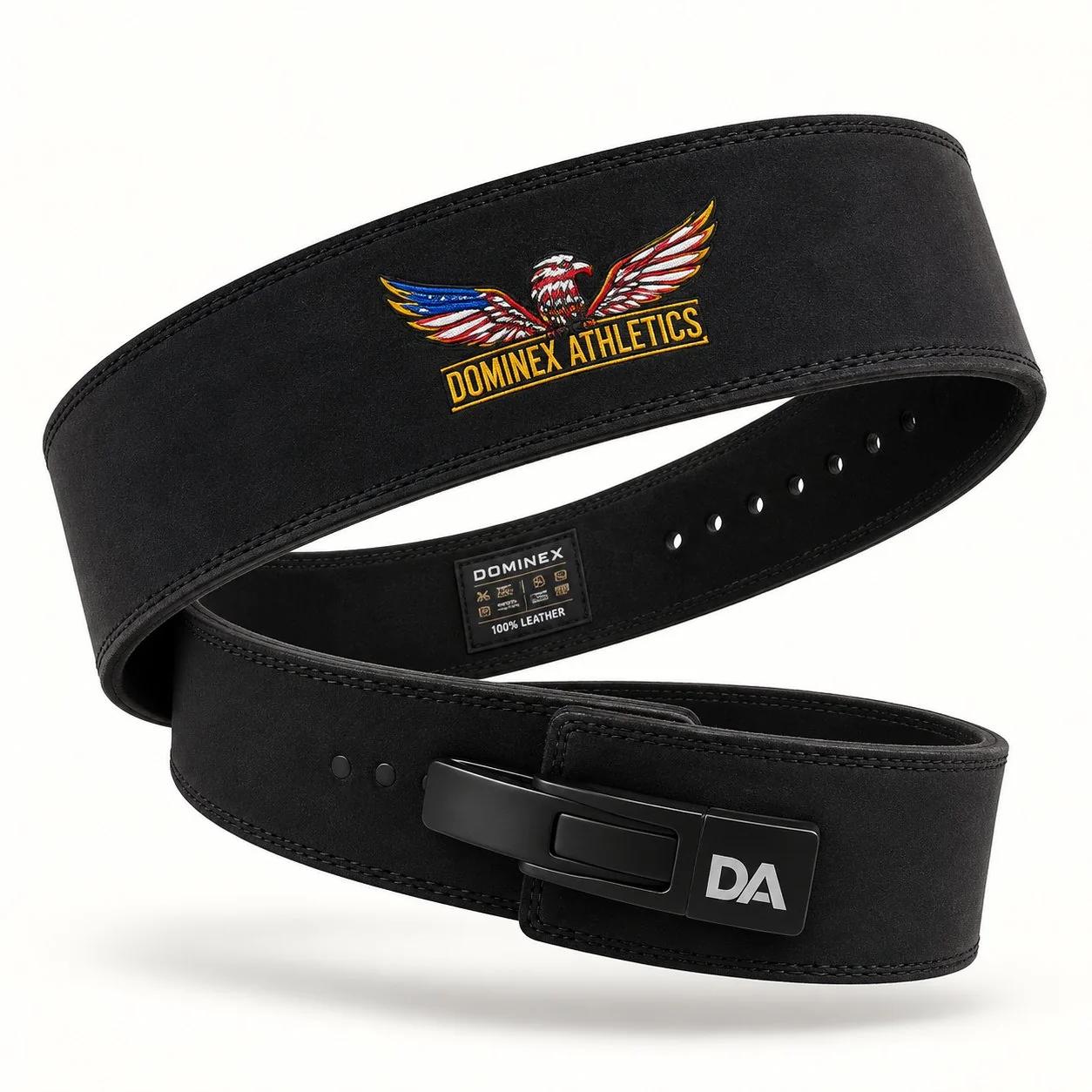
For example, the Dominex Leather Lever Powerlifting Belt is size Large with a 44-inch total length — that is the length of the belt, not the waist it fits. Always compare your waist measurement with the size chart, and contact us if you are unsure before you order.
Step 3: Check the width
Powerlifting belts are usually 4 inches wide all the way around, which gives broad, even support for squats and deadlifts. Shorter lifters or those with a short torso sometimes find a 4-inch belt digs into the ribs or hips on deep squats — try it on in your squat position when it arrives.
How tight should a lifting belt be?
Tight enough that you can just slide a flat hand between the belt and your stomach before you brace. Then take a big breath into your belly and push out against the belt in every direction. If you cannot breathe in fully, it is too tight; if your stomach does not meet the belt when you brace, it is too loose.
When should you wear it?
Most lifters warm up without a belt and put it on for their heavier working sets on squats, deadlifts and overhead pressing. Learning to brace without a belt first makes the belt far more effective when you use it. For a full comparison of belt types, read lever belt vs prong belt, and see every product's measurements in our size guide.
Common questions
Should I size up or down on a lifting belt? Go by your waist measurement at navel height, not your trouser size. If you are right between sizes, think about whether you want a very tight fit for heavy singles (smaller) or more room to brace (larger).
Does a lifting belt stretch? Leather belts soften and mould to your body as you break them in, but they do not get noticeably longer. Choose your size for the fit you need today.
Can women use the same belt? Yes. Lifting belts are unisex — what matters is your waist measurement and torso length, not gender.