
Lifting Belts · 5 min read
Lever belt vs prong belt: which should you buy?
By Dominex Athletics ·
If you are buying your first serious lifting belt, you will quickly hit the same question every lifter asks: lever or prong? Both are built to do the same job — give your core something firm to brace against on heavy squats, deadlifts and presses. The difference is in how the belt closes, how quickly it goes on and off, and how easy it is to change the fit.
What is a lever belt?
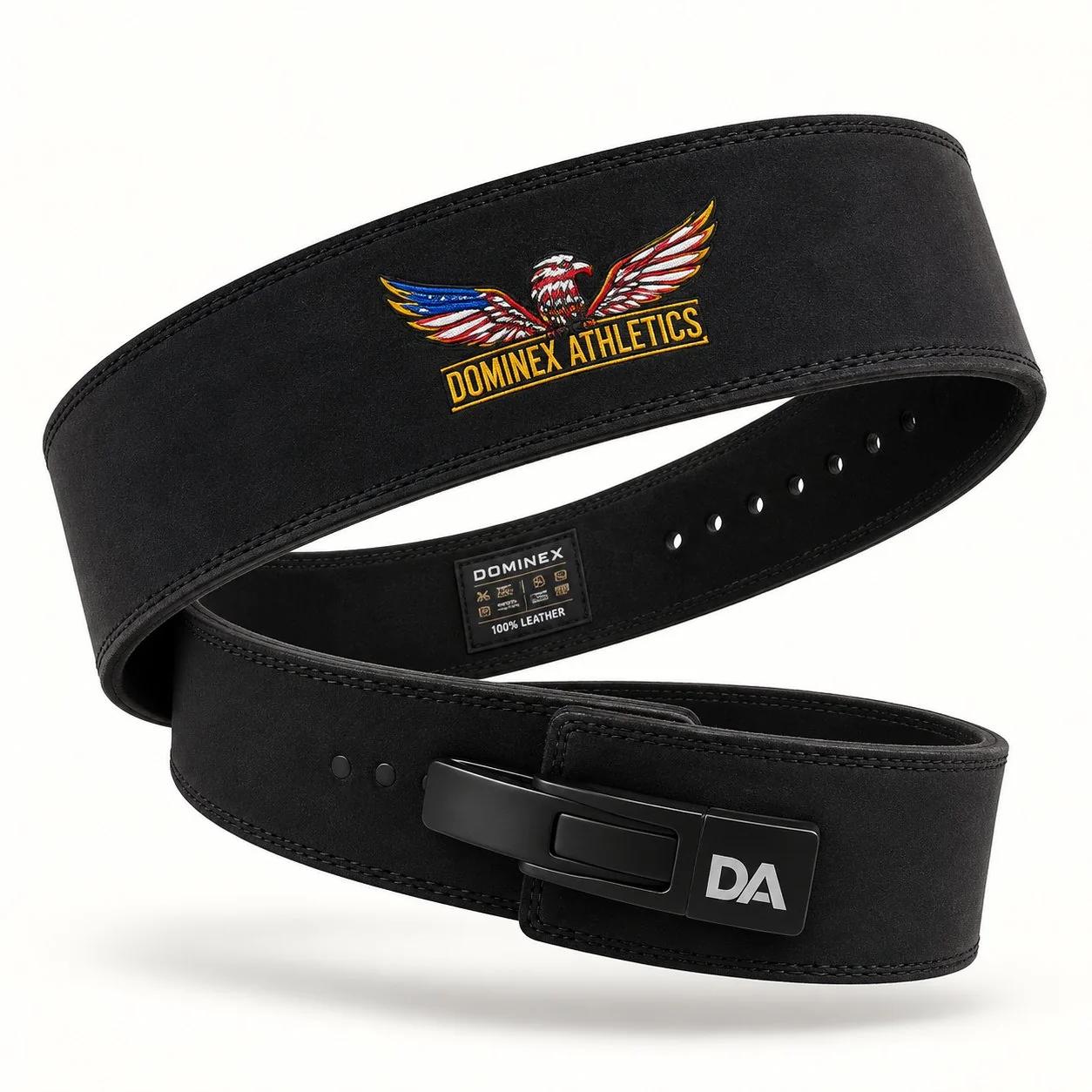
A lever belt closes with a flat metal lever. You hook the lever into the holes that match your fit and flip it shut, and to release it you simply flip it open. The lever is screwed onto the belt, so once your fit is set it stays exactly the same every time you put the belt on.
That consistency is why lever belts are so popular with powerlifters. Setup takes about a second between sets, and you get the same tightness on every heavy single. The trade-off: moving the lever to a different position needs a screwdriver and a few minutes, so it is not something you change mid-session.
What is a prong belt?
A prong belt works like a regular trouser belt. You pull the strap through the buckle and push a prong (single or double) through a hole. Because you choose the hole every time, you can wear it tighter for squats and a notch looser for deadlifts without any tools.
The downside is speed. Threading and pulling a stiff powerlifting belt tight takes more effort, and many lifters cannot get a prong belt quite as tight as a lever belt on their own.
Lever vs prong at a glance
| Lever belt | Prong belt | |
|---|---|---|
| Support when tight | Same | Same |
| Putting it on | About 1 second — flip the lever | Slower — thread and pull |
| Changing tightness between lifts | Not practical (needs a screwdriver) | Easy — choose another hole |
| Same fit every time | Yes | Depends on the hole you pick |
| Best for | Lifters who want one consistent, tight fit | Lifters who want different fits for different lifts |
Which one should you choose?
- Choose a lever belt if you want the fastest setup and the same tight fit on every squat, deadlift and bench set — the most common choice for powerlifting.
- Choose a prong belt if you know you like a looser fit on one lift (often the deadlift) or your waist size changes a lot through the year.
- Either way, pick a belt that is the same width all the way around — 4 inches is the standard for powerlifting-style training.
Tighter is not automatically better. You should still be able to take a big breath into your belly and push your core out against the belt. If you cannot breathe and brace, loosen it one hole.
The Dominex lever belt
The Dominex Leather Lever Powerlifting Belt is a 4-inch lever belt with a leather body, an Amara suede surface and a black lever buckle. It comes in Large with a 44-inch total length — measure your waist where the belt sits before ordering, and read our guide to choosing your lifting belt size if you are unsure.
Common questions
Is a lever belt better than a prong belt? Not in terms of support — when both are worn equally tight they brace you the same way. A lever belt is faster and more consistent; a prong belt is easier to adjust.
Can I adjust a lever belt? Yes. Unscrew the lever, move it to the holes that match your new fit and screw it back in. It takes a few minutes, so most lifters set it once and leave it.
Is a lever belt good for deadlifts? Yes. Many lifters use the same lever belt for squats and deadlifts. If you like a slightly looser fit on deadlifts, you can brace a little less hard rather than changing the lever.